 by
by I’m a native south Floridian. I grew up in a small farming town called Pahokee (circled in red). It’s on the western shore of Lake Okeechobee. The area circled in yellow is Alligator Alley, an 80-mile stretch of I-75 that runs from Naples (on the west coast of Florida) to Ft. Lauderdale (on the east coast). If you’re not afraid of canals, endless fields of sawgrass and swampland, or the possible danger of striking an alligator with your car as it crosses the road, then it makes for a nice, adventurous drive. Regardless of what the Trump Administration, Stephen Miller, Kristi Noem, or anyone else wants you to believe, it is NOT suitable for human dwelling. And it’s certainly no place to erect a concentration camp to house immigrants, legal or otherwise. In fact, the conditions of living in a remote location like Alligator Alley are so inhumane that I wouldn’t even send my worst enemy into this God forsaken place!!!
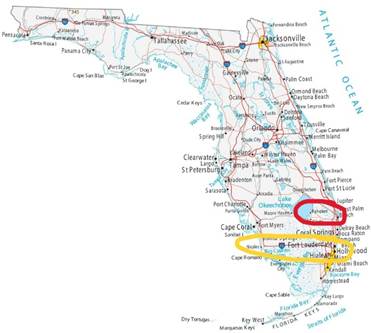
Allow me to tell you a little bit about this particular area of Florida. I’m including graphics to help you get a better understanding of what this area is like. Words and photos will never be able to deliver a true grasp. You would have to see it and experience it for yourself to get a full perception. But I’ll try my best.
I know the area well. I’ve been on this road countless times. I’ll start with the fact that the stretch is 80 miles long. There’s nothing surrounding you but canals, fields of sawgrass, and swamp. There are no stores. No gas stations. No bathrooms. No electricity. Spotty cell phone coverage at best. And that’s just the beginning.


(Florida Sawgrass)
Let’s talk about the indigenous, and not so indigenous, wildlife that roam not only the fields of sawgrass, but the canals, the trees, and the roadway.
Alligator Alley is aptly named because of the hundreds of alligators that swim the canals lining the highway or sunbathe on the banks of the canals. The larger ones, called bull gators, can grow up to about 11-14 feet in length and weigh well over a thousand pounds. Even a smaller alligator can be deadly. When I worked for the Florida Highway Patrol, we worked the scenes of multiple fatalities that were caused by alligators. Vehicle + Alligator rarely ends well. Their outer skin is as tough as a coat of armor, so the maximum damage is always to the vehicle. Unless the vehicle in question is a semi. Cars and SUV’s are prone to go airborne when they strike a gator. Sometimes, the impact is powerful enough to send the vehicle over the guardrails and into the canals. If the initial crash doesn’t result in a fatality, then drowning in one of the canals will. Canal water is so dense with muck and mire that it’s black. When I say black, I mean that you can’t even see your hand in front of your face. If the vehicle is submerged upside down, drivers become disoriented, unsure of which way is up or down. In their panic, more often than not, they succumb to drowning. Gators can swim up to 20 MPH, so don’t plan on trying to outswim one. They’re also extremely fast on land and can sprint up to 35 MPH when on all four legs. They are wild and dangerous carnivores that should never be approached.
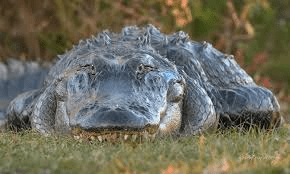

(Bull Gator)
Alligators are just one of many wildlife hazards that thrive on Alligator Alley. There are also cane rats, cane toads, gargantuan spiders, wild boar, Florida panthers, and numerous species of birds.
Cane rats, also known as sugarcane rats, are humongous, as you can see in the photo below. That’s just one example. I’ve seen them up close and personal. Some are bigger than domesticated house cats!!!
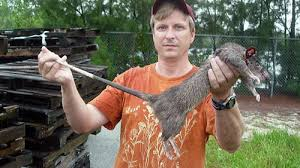
(Cane Rat – Photo Courtesy of The Weather Channel)
Anyone living at the edge of or near a cane field will likely experience one of these rodents finding its way inside their house. In addition to being extremely destructive, they also carry numerous diseases such as Hanta Virus, Leptospirosis, Salmonellosis, Rat-Bite Fever, and Lymphocytic Choriomeningitis Virus. All of these diseases can be spread from rodent to human through bites, urine, and fecal droppings.

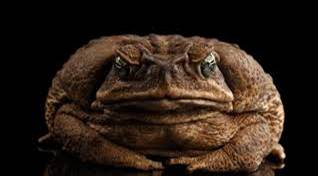
(Cane Toad)
Cane toads are so large that it literally takes two hands to pick one up. They’re also poisonous. They secrete a milky-white toxin called bufotoxin from glands on their skin, particularly from enlarged parotoid glands behind their eyes and other glands on their back. This toxin can be harmful or even fatal to animals, including pets and native wildlife, if ingested or if the toxin enters the bloodstream through mucous membranes.
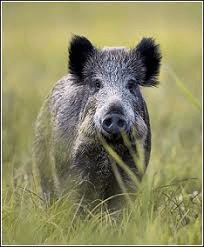

(Wild Boar)
Wild boars can be dangerous. They’re typically not aggressive towards humans, unless they feel threatened or are protecting their young. If you’ve ever seen the movie Old Yeller, then you already know how serious and massive injuries from a boar’s sharp tusks can be.


(Florida Panther)
Florida Panthers, a subspecies of cougars, are extraordinarily beautiful felines. I’ve had the honor of petting one and I can personally tell you that their fur is like stroking velvet. Their known habitats are pinelands, tropical hardwood hammocks, and mixed freshwater swamp forests. The species is listed as endangered due to its small population size and the threats it faces from habitat loss due to development, collisions with motor vehicles, and potential impacts from mercury pollution and diseases.
The wild is their home. They were born there. They live there. If you intrude, you do so at your own peril. Florida panthers are natural predators. If you spot one, do not approach it. Leave it alone and allow it to go on its merry little way. Yelling, “here kitty, kitty,” will NOT entice these critters to come to you. To him/her, you are simply food. That’s it.
The Florida Everglades, including Alligator Alley, is teeming with various species of spiders. Some are harmless, others not so much. If you’re like me and are terrified of these creatures, while they may not want to harm you, they can doggone sure ‘nuff make you harm yourself by trying to get away from them.
Here are just a few that are synonymous with South Florida and the Florida Everglades, in general.
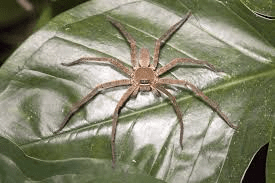
(Pantropical Huntsman Spider) Non-poisonous, but HUGE. Open your hand and take a good look at the span. Now, imagine a spider fitting there! Yes, that’s how big they get. They’re also quite fast and they jump. I had one jump in my face once and I nearly beat myself to death trying to get it off me!!
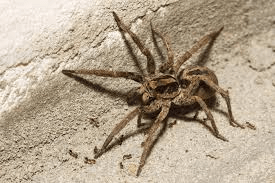
(Wolf Spider) Non-poisonous but can deliver a painful bite. These critters grow quite large as well, but not as large as the Pantropical Huntsman.

(Black Widow) Deadly poisonous. Leave them alone!
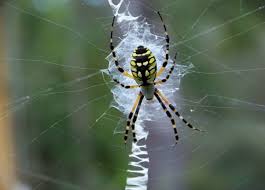
(Banana Spider) Non-poisonous but their bite hurts like the dickens! If you ever get bitten by one, you’ll take extreme measures to avoid the next one. They are beautiful creatures and spin the neatest zig zag webs.
There are multiple species of snakes all over the state of Florida, most of them harmless, but in the southern part of the state, although Pythons are NOT indigenous to the area, they have become overly invasive. Why is that? Because idiots, er, I mean people bought them as pets, decided they no longer wanted them for one reason or another, and instead of returning them to the pet store or donating them to a zoo or animal shelter, they set them free in the Everglades, which has taken a massive toll on the natural ecosystem there. But Pythons aren’t the only snake that are a threat. There are also Cottonmouth Water Moccasins, as well as different species of venomous snakes, including rattlers.
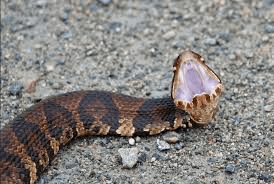
(Cottonmouth Water Moccasin) A type of pit viper that is venomous. Their venom is hemotoxic, meaning it can damage blood cells and tissues, and it also impairs blood clotting. While bites can be serious and cause significant pain and tissue damage, fatalities are rare, especially with prompt medical treatment.

(Eastern Diamondback Rattlesnake) Venomous. Its venom is considered toxic and can be dangerous to humans, potentially causing severe tissue damage and even death if not treated promptly with antivenom. While fatalities are relatively rare due to the availability of medical treatment, a bite from this snake is a serious medical emergency that requires immediate attention.
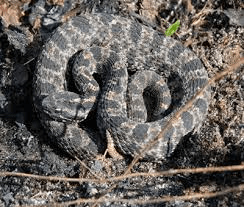
(Dusky Pygmy Rattlesnake) Venomous. Smaller than the Eastern Diamondback, found in various habitats in the Florida Everglades.
If you think that’s enough, you’re wrong. There’s more.
This remote and undeveloped area known as Alligator Alley is a PROTECTED wildlife habitat. It was NEVER intended to serve the purpose of housing human beings, yet that changed with the opening of Alligator Alcatraz. And I can guarantee you that this will be some of the WORST living conditions human beings were ever forced to reside in.
As if compelling these people to deal with all the indigenous wildlife, reptiles, amphibians, creepy crawlers, and birds wasn’t cruel enough, these immigrants will reside in tents, in Florida, in the summertime, where scorching temperatures reach the mid to high 90s on any given day. They will have no electricity, no running water, and port-o-potties to serve as bathrooms. These living quarters will become a breeding ground for all kinds of infectious bacteria that could be life threatening. Wetlands such as those surrounding Alligator Alley are swarming with mosquitoes, so let’s not forget about them and the diseases they’ve been known to spread. One I’m sure everyone has heard of is the West Nile Virus, but there are plenty of others, including Malaria, Dengue Fever, Zika Virus, and Chikungunya.
Setting up what can only be referred to as a modern day concentration camp in this location is nothing short of a pending death sentence for immigrants whose only crime was committing a civil offense by not becoming a documented legal citizen, or a traffic violation. (I’m still waiting on all those rapists and murderers to be picked up and detained!!) If the alligators, wildlife, and heat stroke doesn’t kill them, bacteria or flood waters will.
Because, you see, in south Florida, it rains and storms. A lot. Canal waters overflow their banks and gush into surrounding fields. South Florida has tropical storms and hurricanes. One good windstorm blowing through the camp will wipe it out. There is no surrounding safe shelter for them to take cover.
Don’t buy what this administration is trying to sell you about their so-called “detention center.” They want you to believe that living arrangements will be akin to spending a night at the Ritz Carlton, lounging and relaxing while their champagne chills on ice. Don’t believe a lying word that spews from any of their mouths. That’s total bullshit that couldn’t be further from the truth. Take it from me, a native south Floridian who knows the region quite well, forcing a human being to live in that area, under the conditions I’ve pointed out, is so far beyond cruel and inhumane that it’s indescribable.
Let me add my own little personal note here. If YOU have no problem with humans being sent to live there, or you are cheering this on, then I DON’T WANT TO KNOW OR ASSOCIATE WITH YOU!!! Go ahead and unfriend me. Block me. Unfollow me. Whatever. I genuinely DO NOT CARE. Because if you’re okay with any of this, then that makes you a pathetic excuse of a human being, one who is absent of compassion and empathy, and I have no desire to interact with anyone who is proud of having those qualities.
Additionally, I think all of those who think this is funny, believe these immigrants are being “treated in the way they deserve,” or have no problem forcing humans, regardless of skin color, to live there, should be first in line to spend a night or two, see how they like it, then report back to us about how their night at the Ritz was. Of course, we might not learn much. Between the Calamine lotion for the “skeeter” bites, lying awake all night because they can hear the gators snorting all around them, wondering if they’re in the canals, on the banks, or just outside their tents, or picking ticks off their skin, they won’t feel much like talking!
Here are some photos of Alligator Alley.


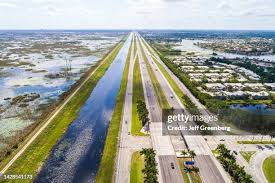

(Photos Courtesy of Getty Images)
I also found some pictures of “Alligator Alcatraz”
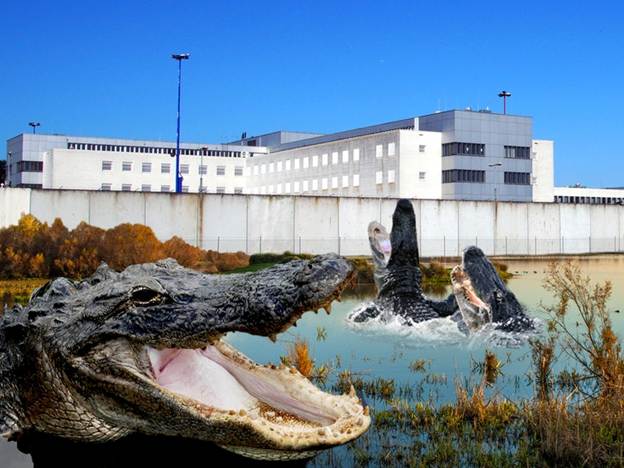
Of course this isn’t real, but believe it or not, this is an ACTUAL ad for “Alligator Alcatraz” concocted by the A.G. whose idea it was to build the facility. Don’t be fooled by that white building in the background. The finished product looks NOTHING like that.
Then there’s the above video and news story.
Here’s a better description:
“Alligator Alcatraz” will primarily house migrants in heavy-duty tents and trailers, rather than traditional buildings. The facility, located in the Florida Everglades, is designed to be a cost-effective way to detain migrants apprehended in the state.
The decision to use tents and trailers is driven by the remote location and the desire for a quick, low-infrastructure setup. The facility, which is being built at the Dade-Collier Training and Transition Airport, is intended to be a temporary detention center.
While there will be some trailers for staff, the main housing for migrants will be in large tents. The natural barriers of the Everglades, like alligators and pythons, are also considered part of the security measures, making extensive perimeter security less necessary.”
I used Google AI for the following. I typed in the question: Will air conditioning be provided to immigrants at Alligator Alcatraz and this is the response it gave me:
Will air conditioning be provided to immigrants at Alligator Alcatraz?
Based on recent news reports, it appears that air conditioning is expected to be provided at the “Alligator Alcatraz” facility.
Specifically:
- Florida Governor Ron DeSantis stated that the facility will feature air conditioning, along with medical facilities and legal aid opportunities.
- During a tour of the site, footage showed portable restrooms and air conditioning systems under tent structures that will house detainees.
- CBS News reported that four large tents, complete with portable air conditioners, will be used to house detainees.
It’s worth noting that while these reports indicate air conditioning will be present, concerns remain about the overall conditions and human rights at the facility, according to some advocates and news outlets. For instance, one report mentioned the lack of sufficient time to fully discuss the plans for the facility, raising questions about staffing for medical and other services, particularly given the Florida summer heat.
Lies! Lies! And more lies! DeSantis isn’t going to come right out and say, “No, there will be no air conditioning in these tents.” He wouldn’t dare want anyone to know how inhumane that would be.
Frankly speaking, I don’t believe a word that comes out of any of these Republicans’ lying mouths because all they do is try to gaslight the American people into believing everything they say. But I hate liars and I’m not afraid to speak the truth.
The first thing you need to understand about where this particular detention center has been built is that it occupies a long-unused training and transition airport/airstrip located in Dade-Collier County, about 30 miles west of downtown Miami. Development was halted on the project in 1970 and has only one runway. Here’s an aerial shot of the location:
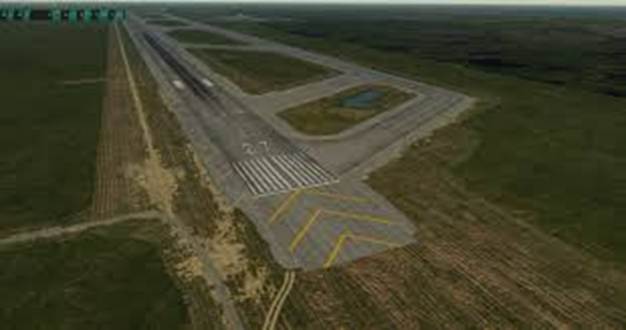
For the sake of this article, I’ll give DeSantis the benefit of the doubt about whether or not these tents are air conditioned; but that benefit of doubt doesn’t come without questions. Take a good look at the above photo. How many electrical pylons do you see in the photo? How about power poles? Power lines? Here’s a clearer shot:

How about now? As you can clearly see, this place is in the middle of nowhere with no surrounding homes, cabins, trailers, or people. Nothing but swamp. And wildlife. So, how many generators will be required to operate portable air conditioners in the tents for those thousands of immigrants that will be housed in them? Or is the air conditioning reserved only for the trailers that will house the staff?
Check out this video from CBS News of a tour of Alligator Alcatraz. There is also quite a bit of opposition to the building of this facility, and for good reasons.
Let me make something perfectly clear. I can NOT personally attest to whether or not these tented structures will be air conditioned. I have not been inside the facility. I do, however, know the area well, and I also know how to read and conduct research.
Reportedly, Alligator Alcatraz will cost $450 MILLION a year to operate. The cost is expected to be initially covered by the state of Florida with the state planning to seek reimbursement through FEMA. (Is this where I should place a laughing emoji?) DHS is also looking into potentially purchasing the land for another cool $20 MILLION. That might present a problem. The last time I checked, the land wasn’t for sale. Like I said earlier, the location of this camp is on a PROTECTED wildlife habitat. But just like our sacred national parks, this administration doesn’t give a damn about destroying anything. That should be obvious simply by the location of this camp.
I did multiple searches about the installation of power poles/lines at this facility. This is what I found out:
“Alligator Alcatraz, the immigration detention facility in the Florida Everglades, does not have installed electric poles in the traditional sense, but relies on alternative power sources.
Here’s why:
- Remote Location: The facility’s isolated setting in the Everglades makes connecting to the mainland power grid impractical.
- Alternative Power: The facility utilizes a solar-diesel hybrid microgrid system to generate its electricity
- This system includes solar panels and batteries, supplemented by diesel generators.
- Infrastructure for Flag Poles and Electrical Cables: News reports mention poles used to hoist flags within the tent structures and electrical cables on the floor, suggesting some internal infrastructure for power distribution within the facility.
In summary, while Alligator Alcatraz does not have external electric poles, it does have internal electrical infrastructure to distribute power generated by its microgrid system.”
Then I searched “solar-diesel hybrid microgrid, and this is what the search returned:
“A diesel hybrid microgrid system combines traditional diesel generators with renewable energy sources like solar or wind, along with energy storage, to create a localized and more resilient power system. It optimizes the use of various energy sources, improving efficiency, reducing costs, and enhancing reliability compared to a solely diesel-powered system.

(Diesel Hybrid Microgrid System)
Here’s a more detailed explanation:
Key Components and Functionality:
Renewable Energy Sources: Solar photovoltaic (PV) panels and wind turbines are common additions, providing clean energy when available.
Diesel Generators: These serve as backup power sources and can be used to supplement renewable energy when needed, especially during periods of low solar or wind production.
Energy Storage: Batteries are crucial for storing excess energy generated by renewables and for providing power during peak demand or when renewable sources are unavailable.
Control System: Advanced control systems manage the different energy sources, ensuring a stable and reliable power supply to the microgrid.
Distribution Network: A local distribution network connects the various components and delivers power to the end-users within the microgrid.
Increased Reliability: Having multiple energy sources, including a reliable backup like diesel generators, makes the system less vulnerable to outages and disruptions.
Reduced Fuel Costs: By integrating renewable energy sources, the reliance on diesel fuel is reduced, leading to lower operating costs and reduced fuel consumption.
Environmental Benefits: Hybrid systems can significantly reduce carbon emissions compared to traditional diesel-only systems by incorporating renewable energy sources.
Cost Optimization: The system can be designed to optimize energy costs by utilizing renewable energy when available and using diesel generators when necessary.
Grid Independence: Hybrid microgrids can operate independently from the main power grid, providing a reliable power source in remote areas or during grid outages.
Flexibility and Scalability: Hybrid microgrids can be tailored to specific needs and scaled up or down as required, making them suitable for various applications, from small communities to large industrial facilities.
I Googled images in search of a recent photo of the exterior of Alligator Alcatraz, but there doesn’t seem to be any, other than the empty airfield where they’re moving in, and photos of trailers. Without current photos, it’s impossible to prove or disprove the claim of solar panels and/or generators. However, I did find a few photos of what the inside of the tents look like. See if you can figure out what’s missing in these photos!


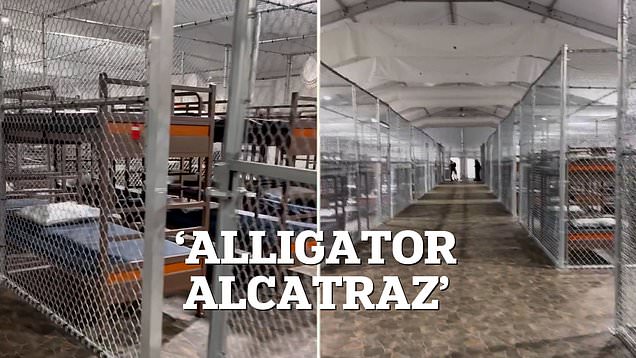
Now, look at these next photos of concentration camps and note how eerily similar they are.
(Living Quarters of a German Camp)


(Buchenwald)
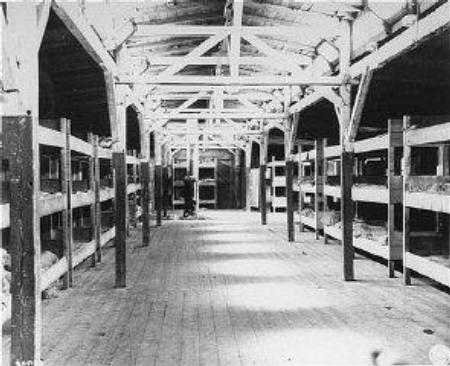
(Flossenbürg)
Charming, isn’t it?
After reading this, learning the facts, and seeing the photos, if you’re still okay with sending human beings to live in these conditions, then you are a seriously flawed individual!!
You should be ashamed of yourself!!!!
GNP
 Glenda Norwood Petz, Author
woh ! I worked for a company in South Florida , we were in the swamp . I saw the flora and fauna for thirty years , no ac and I worked useally in a hanger or flight field .
We were invaded by millions of illegals and it wasn’t going to stop . So … these people that are held here will be well protected. The cost ? Well ask Biden how much he spent on houseing these people and the free Medicare that was furnished to them
LikeLike