What Would Happen to the United States if the Constitution Were Terminated?
An Exploration of Chaos, Change, and the Future of American Governance
Introduction
The United States Constitution stands as the bedrock of the nation’s law and governance, a document that has guided American democracy for over two centuries. But what if, in some unprecedented twist of fate, the Constitution were suddenly terminated? This thought experiment, though alarming and unlikely, provides insight into the fragility of the country’s political system and the profound consequences that would ensue. In this blog, we will delve into the legal, political, and societal ramifications of a post-Constitution United States, exploring everything from immediate chaos to the long-term search for a new national identity.
The Foundation: Why the Constitution Matters
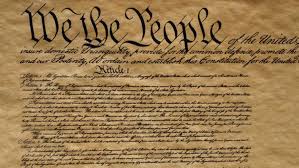
To understand the consequences of terminating the Constitution, it is vital first to appreciate its importance. Ratified in 1789, the Constitution established the framework for federal government, enshrined the separation of powers, and articulated the fundamental rights of the people. It is not merely a legal document; it is the very heart of the American contract between government and governed.
Key functions of the Constitution include:
- Defining the structure and limits of federal and state governments
- Guaranteeing individual rights and liberties through the Bill of Rights and subsequent amendments
- Providing the mechanism for electing representatives, presidents, and judges
- Offering a system for amending the nation’s basic laws
Without the Constitution, these foundational pillars would vanish, leaving a void at the center of American civic life.
Immediate Legal and Political Chaos
Imagine the scenario: the Constitution is declared void and unenforceable. Suddenly, all laws, institutions, and procedures derived from it lose their legitimacy. The three branches of government—the Executive, Legislative, and Judicial—would no longer have a legal mandate to function as they have since 1789.
Some immediate consequences might include:
- Government Paralysis: With no legal basis for their existence, Congress, the Presidency, and the Supreme Court would lose their authority. Federal agencies could not operate, and their leaders would have no legitimate power.
- Laws and Rights in Limbo: Federal laws based on constitutional authority would be thrown into question, as would the protections guaranteed by the Bill of Rights. Civil liberties—free speech, religious exercise, due process—would have no explicit legal backing.
- State Governments in Turmoil: While states have their own constitutions, much of their relationship with the federal government is rooted in the U.S. Constitution. The dissolution of federal authority could prompt states to act independently, possibly fracturing the nation.
Potential for Power Struggles and Fragmentation
The sudden absence of a unifying legal framework would create a power vacuum. History teaches us that power abhors a vacuum.
Possible developments:
- State Secession or Autonomy: States might assert their sovereignty, refusing to recognize federal authority. Some may even attempt to secede, forming new alliances or confederations.
- Emergence of Factions: Political and social factions could vie for control, seeking to fill the leadership void. Rival governments might declare themselves legitimate, leading to internal conflict.
- Military Intervention: In the face of chaos, the U.S. military might step in to maintain order, introducing the risk of authoritarian rule or martial law.
Without constitutional checks and balances, the risk of tyranny or anarchy would dramatically increase.
The Fate of Civil Liberties and Human Rights
One of the Constitution’s greatest achievements is its protection of individual rights. If the Constitution were terminated, these rights would lose their foundational legal status.
Possible outcomes:
- Rights Become Negotiable: Freedoms of speech, assembly, religion, and the press would depend on the goodwill of whatever governing bodies emerged.
- Increased Risk for Minority Groups: Without constitutional guarantees, vulnerable populations could be subject to discrimination, persecution, or the loss of hard-won rights.
- Legal Uncertainty: Courts would have no higher law to reference, opening the door to arbitrary detention, property seizures, and other abuses.
Economic and International Consequences
The Constitution also underpins the stability and predictability of the American economy and the nation’s standing in the world.
Likely impacts include:
- Economic Instability: With legal uncertainty and potential civil unrest, markets would plunge, businesses would hesitate to invest, and unemployment could rise.
- Loss of International Confidence: The United States, long seen as a beacon of democracy and rule of law, would lose global credibility. Allies might distance themselves, and adversaries could take advantage of the disarray.
- Disruption of Treaties and Agreements: International treaties ratified under the Constitution would be in question, potentially upending global alliances, trade, and security arrangements.
The Search for a New Order
In the medium to long term, Americans would likely seek to reestablish some form of constitutional governance. History is replete with examples of societies replacing failed governments with new frameworks—sometimes improving upon the old, sometimes not.
Steps towards a new order might include:
- Constitutional Convention: Leaders might convene to draft a new constitution, perhaps drawing lessons from the collapse of the old order.
- Debates Over Rights and Government: There would be intense debate over which rights to protect and what powers to grant government institutions. Issues like the balance between federal and state authority, the structure of representation, and the role of the military would be critical.
- Potential for Innovation—or Regression: The crisis could prompt bold reforms, or it might lead to the entrenchment of power among elites or factions.
Historical Parallels and What We Can Learn
The theoretical termination of the U.S. Constitution invites comparison with other nations that have lost or radically changed their founding documents.
Consider:
- Post-revolutionary France: In the chaos following the French Revolution, the absence of a stable constitution led to cycles of violence, dictatorship, and reform.
- The Collapse of the Soviet Union: The sudden dissolution of a central governing document led to years of instability, economic hardship, and regional conflict.
- Modern Examples: Countries where constitutions have been suspended or ignored often fall into authoritarianism, civil strife, or chronic instability.
The lesson is clear: the rule of law and a shared constitutional framework are essential to a stable, just, and prosperous society.
Conclusion
The termination of the U.S. Constitution would represent a seismic shift in American life, unleashing legal chaos, endangering civil liberties, and threatening both unity and prosperity. While it is a highly unlikely scenario, considering its implications reminds us of the Constitution’s enduring value. The document is not infallible, nor is it immune to criticism or reform. But its presence provides the structure and security necessary for the American experiment to endure. In the end, the Constitution is not just a piece of parchment—it is the living soul of the United States. Without it, the nation would face daunting challenges and an uncertain future, a sobering reminder of the importance of safeguarding the principles and institutions that bind the country together.
GNP
 Glenda Norwood Petz, Author