The Emoluments Clause: What It Is and Why It Was Created
Understanding a Key Constitutional Provision for Preventing Corruption
What Is the Emoluments Clause?
The Emoluments Clause is a provision found in the United States Constitution that aims to prevent federal officeholders from being influenced or corrupted by foreign governments or monarchs. Specifically, the clause prohibits anyone holding an “Office of Profit or Trust” under the United States from accepting any present, emolument, office, or title from any King, Prince, or foreign State, unless Congress consents to it. The clause is located in Article I, Section 9, Clause 8 of the Constitution and is sometimes referred to as the “Foreign Emoluments Clause.”
Text of the Clause
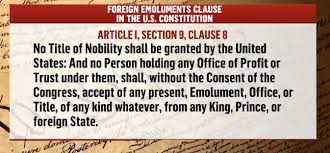
The exact wording is: “No Title of Nobility shall be granted by the United States: And no Person holding any Office of Profit or Trust under them, shall, without the Consent of the Congress, accept of any present, Emolument, Office, or Title, of any kind whatever, from any King, Prince, or foreign State.”
Does the president have to divest business interests? The President, the Vice President, the spouse of the President or Vice President, and any minor child of the President or Vice President MUST divest any financial interest posing a potential conflict of interest by transferring such interest to a qualified blind trust.
For example, Jimmy Carter sold his peanut farm prior to running for President to prevent a conflict of interest.
Why Was the Emoluments Clause Created?
To understand why the Emoluments Clause was included in the Constitution, it’s important to look at the context in which the Founding Fathers were forming the new government. At the time, many European monarchies and foreign governments tried to sway the actions of foreign officials by offering them gifts, honors, or money—otherwise known as “emoluments” or bribery. The framers of the Constitution wanted to ensure that American officials served the interests of the United States, not foreign powers.
Preventing Corruption and Foreign Influence
The main purpose of the Emoluments Clause is to prevent corruption and the appearance of impropriety. By prohibiting federal officials from accepting gifts or titles from foreign governments without congressional approval, the clause serves as a safeguard against undue influence. The founders were concerned that even the perception of foreign influence could undermine the legitimacy and independence of the new republic.
Historical Roots
During the colonial era and under British rule, it was common for foreign kings and leaders to try to influence American officials through gifts or honors. The Founders wanted to break from this tradition and make sure that public service in America would not be tainted by such practices. They drew inspiration from earlier English laws and European political experience, which showed the dangers of officials accepting benefits from foreign powers.
A Continuing Principle
Although the Emoluments Clause was written in the 18th century, its core principles remain relevant today. Questions about the clause have arisen in modern times, especially regarding whether business dealings or certain gifts might count as “emoluments.” Nonetheless, the underlying intent is clear: those entrusted with serving the country should do so without the risk of foreign entanglements or divided loyalties.
Conclusion
The Emoluments Clause is a testament to the foresight of the Founding Fathers. By including it in the Constitution, they aimed to protect the integrity of the U.S. government and ensure that its officials remained loyal to the American people above all else. In a world where foreign influence is still a concern, the Emoluments Clause stands as a key reminder of the importance of transparency and public trust in government.
GNP
 Glenda Norwood Petz, Author